
The right lubricant filling machine depends far more on your pack format than on the oil. A blender selling 1 litre bottles to workshops needs a very different setup from one shipping 208-litre drums to fleet operators, even if the oil in both is identical. This guide works through each format and the Phoenix machines built for it.
Retail bottles
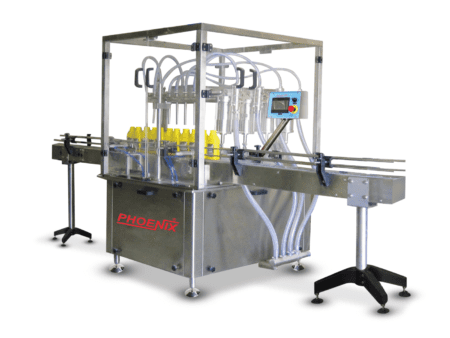
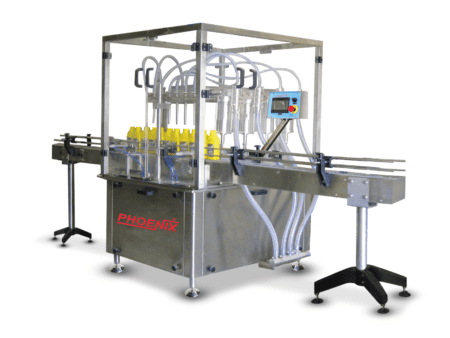
Bottles of engine oil, gear oil and hydraulic oil are where speed matters most. Phoenix builds automatic servo filling machines with 8 heads and 12 heads for this work. Servo control lets you set the fill volume for each head from the panel, so moving between bottle sizes does not mean adjusting mechanical stops by hand.
For a simpler, positive-displacement option, there is also an automatic piston filling machine. Piston fillers are a common choice for thicker oils because the volume is fixed by the piston stroke.
Servo or piston for bottles?
Both will fill bottles accurately. The difference is in changeovers and flexibility. A servo filler stores fill settings electronically, which suits blenders running many SKUs and switching sizes several times a day. A piston filler is mechanically simpler and well suited to long runs of thicker oils in one size. If your product list is short and stable, a piston machine may be all you need. If it keeps growing, servo control will save setup time.
Pails and buckets
Pails sit between retail and bulk. Phoenix offers an automatic servo 4-head pail filling machine for higher volumes and a semi-automatic single-nozzle bucket filling machine rated from 5 to 20 kg. Pails usually need a press-on lid rather than a screw cap, and Phoenix's semi-automatic cap lid pressing machine handles that step.
Drums
For bulk supply, the semi-automatic single-nozzle drum filling machine covers 5 to 220 kg. That reaches standard industrial drums and suits blenders who fill to order rather than run continuous lines.
Grease
Grease will not flow through a standard liquid nozzle, so it has its own equipment. Phoenix lists an automatic 4-head grease filling machine and a semi-automatic version.
After the fill
A filled container still has to be closed, sealed, labelled and coded. Phoenix's lubricant filling machine range includes:
- automatic and semi-automatic linear capping machines, plus an eight-head rotary pick-and-place capper
- Sigma induction sealers in water-cooled and air-cooled versions
- automatic round bottle and front and back labelling machines
- Videojet and Hitachi coders for batch and date printing
- a stretch pallet wrapping machine for outbound loads
Induction seals give a tamper-evident barrier under the cap, which helps against both leaks and counterfeit refills, a real concern for branded lubricants.
Keep food oils separate
Some packers handle both industrial and edible oils. Do not share equipment between them. For edible oils, Phoenix builds a dedicated electronic filling machine for olive oil, covering 10 ml to 100 ml, and a matching electronic filling machine for essential liquid products such as oud oil. Larger olive oil filling machine requirements should be discussed with the supplier so the line is specified for food use from the start.
Service and calibration
A filler that drifts out of calibration gives away oil on every container, and on drums that adds up quickly. Phoenix offers calibration, spare parts, installation, operator training and annual maintenance contracts. The company has supplied filling and packaging machinery since 1999 and serves customers across the Middle East, Africa, Asia, Europe and the Americas.
Next step
Match the machine to the pack, not the other way round. List your bottle, pail and drum sizes, your daily volumes and your oil grades, then speak to the team through phoenix-pack.com for a recommended setup.